Introducing The AI Project Planner — Scope, Build, Map, Compare, and Enrich your projects with precision. Learn More →
AI handles the grind while your people drive impact.
Optimize Efficiency. Unleash Potential.
The AI Risk Mitigator
From reactive crisis management to proactive risk prevention.


THE PROBLEM:
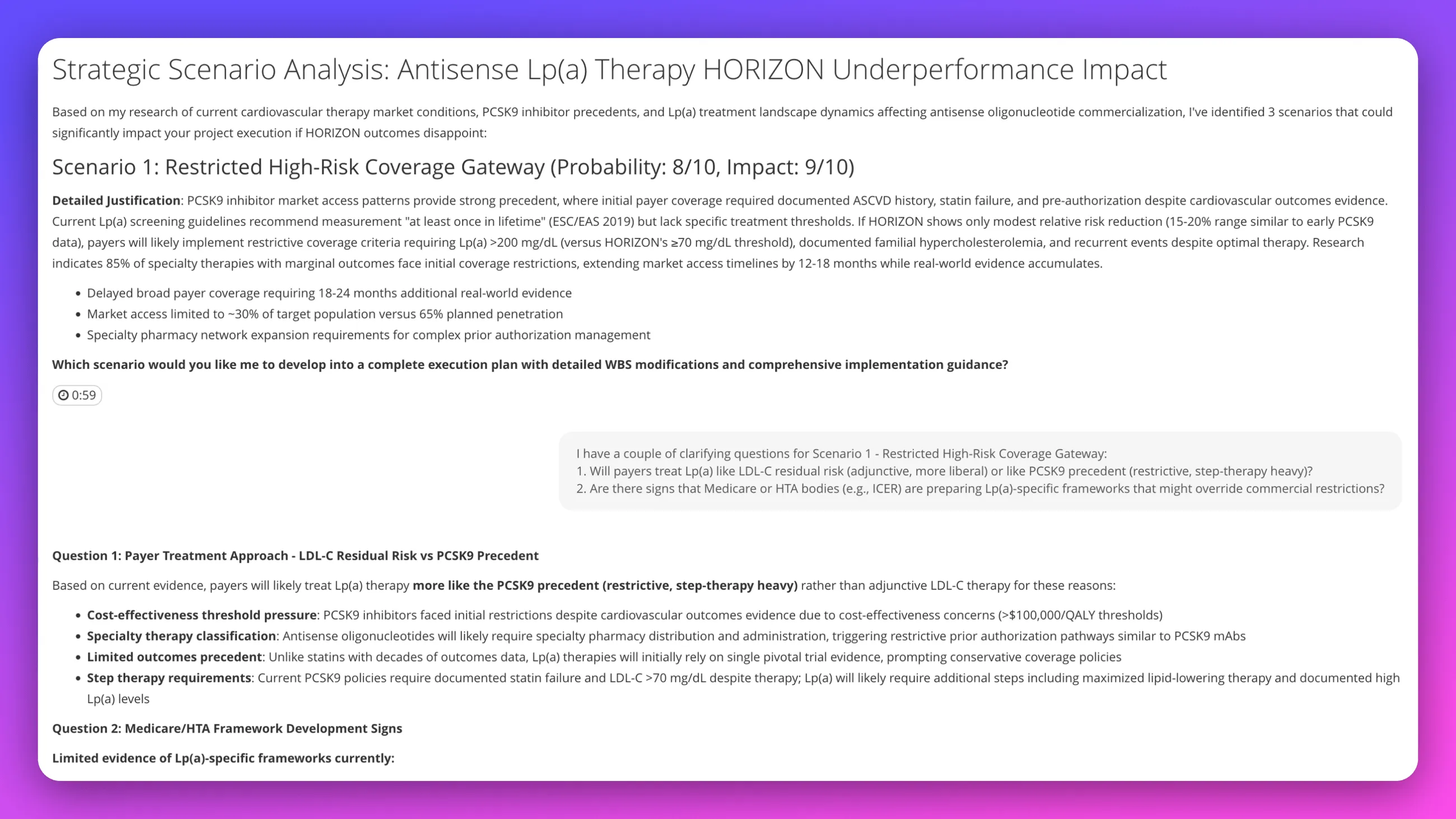
Your program is underway. Then the unexpected happens. A critical dependency you didn't map blocks execution. Resource constraints you didn't anticipate create bottlenecks. Budget pressures compound across phases. Scope assumptions prove unrealistic. Your team is fire-fighting instead of executing. Leadership questions why risks weren't identified earlier. Most risk registers are generic checklists that identify problems after they've materialized. You need early warning systems, not hindsight.
WHAT MITIGATOR DELIVERS:
THE OUTCOME:
Execution risks are identified before they derail momentum. Your team knows which risks are critical (P1), which need monitoring (P2), and which are acceptable (P3). Mitigation strategies are specific and actionable—proven approaches, not platitudes. Governance meetings shift from "why didn't we see this?" to "here's how we're preventing it." Your program navigates execution challenges while competitors stumble.
WHO MITIGATOR HELPS:
Program Directors and PMO Leaders who refuse to let preventable risks derail execution—protecting timeline, budget, and objectives.
Prompt:
Conduct risk assessment for Phase 3 anti-tau antibody in Alzheimer's disease advancing toward BLA submission. Evaluate risks across clinical/scientific, regulatory/compliance, operational, and commercial dimensions. Prioritize by probability-impact scoring identifying P1 critical risks threatening launch timeline and P2 risks requiring monitoring protocols.
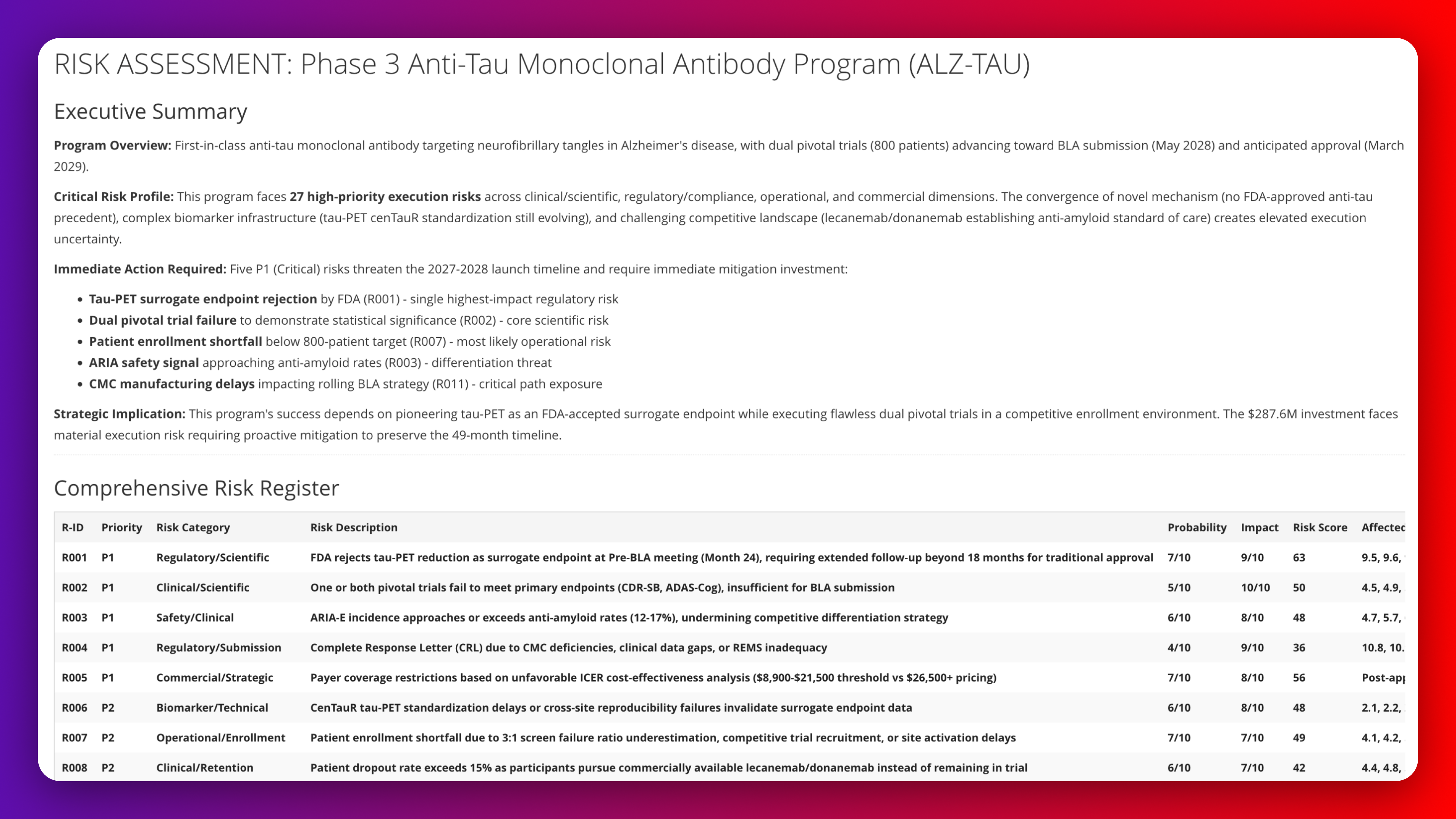
Prompt:
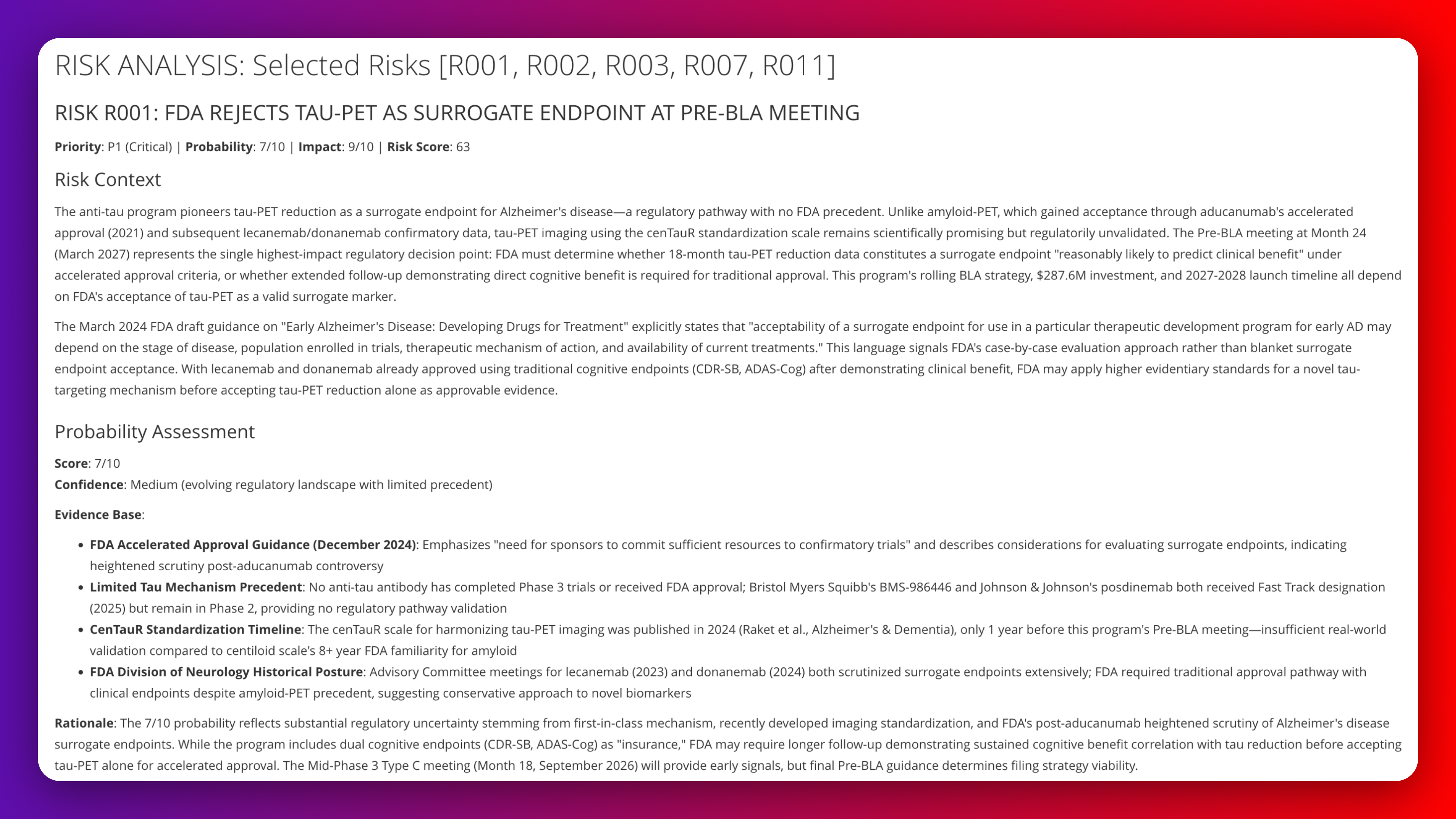
Analyze regulatory risk for tau-PET surrogate endpoint acceptance given limited FDA precedent for tau-targeting mechanisms. Score probability and impact with evidence base from FDA accelerated approval guidance, anti-amyloid Advisory Committee precedents, and cenTauR standardization timeline. Quantify timeline, budget, and resource implications if risk materializes.
Prompt:
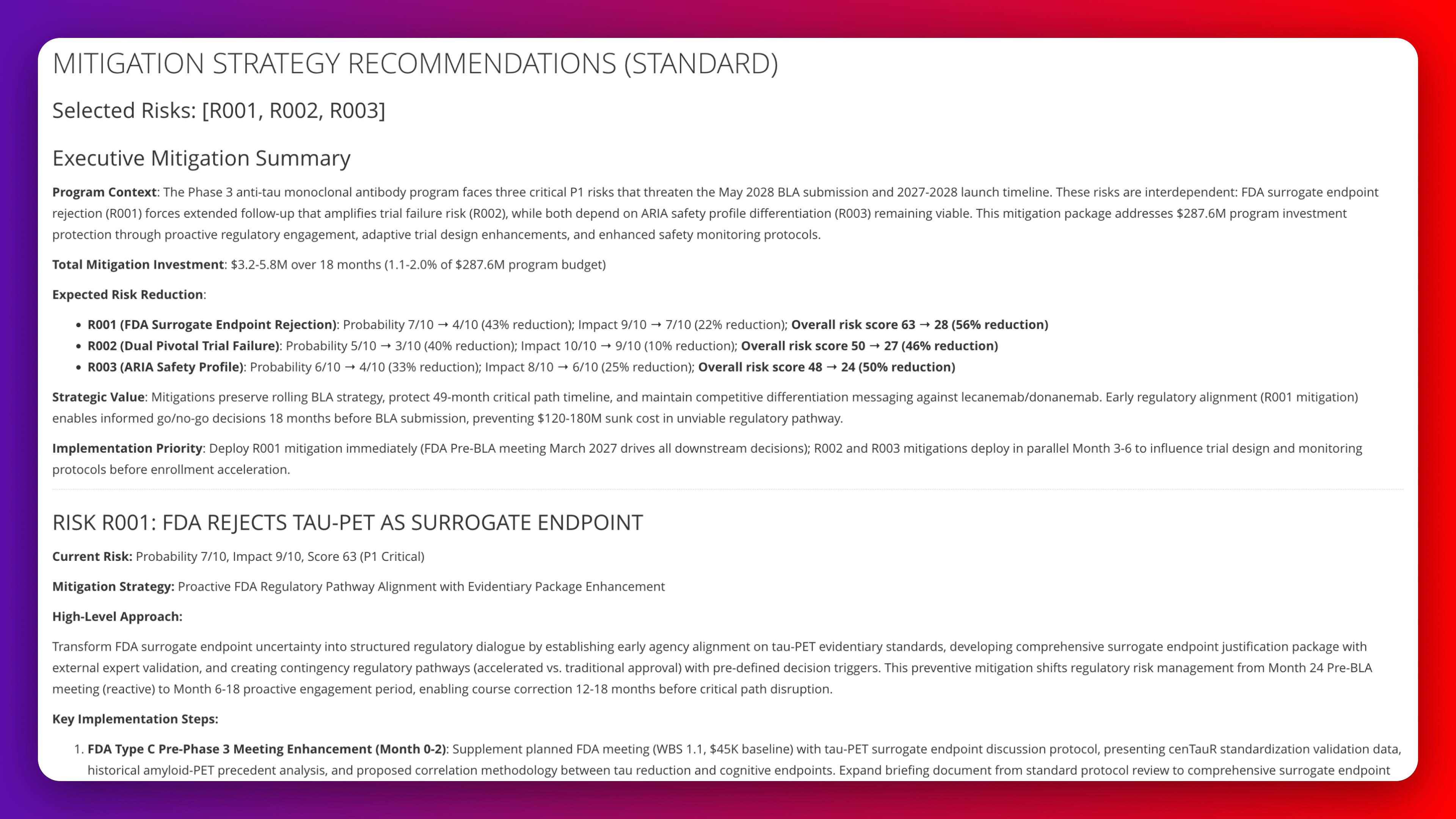
Develop mitigation strategies for critical P1 risks in Phase 3 anti-tau antibody Alzheimer's program with implementation timeline, investment requirements, and expected risk score reduction. Provide key implementation steps for tau-PET endpoint validation, ARIA safety management, and competitive positioning against lecanemab/donanemab with month-specific activities and decision triggers.
Our SOC 2 Type II examination is underway with Prescient Assurance. We never train models on your data without your explicit consent. Our controls, policies, and current audit status are published in our Trust Center.

Start Building Today
Log in or create a free account to scope, build, map, compare, and enrich your projects with Planner.